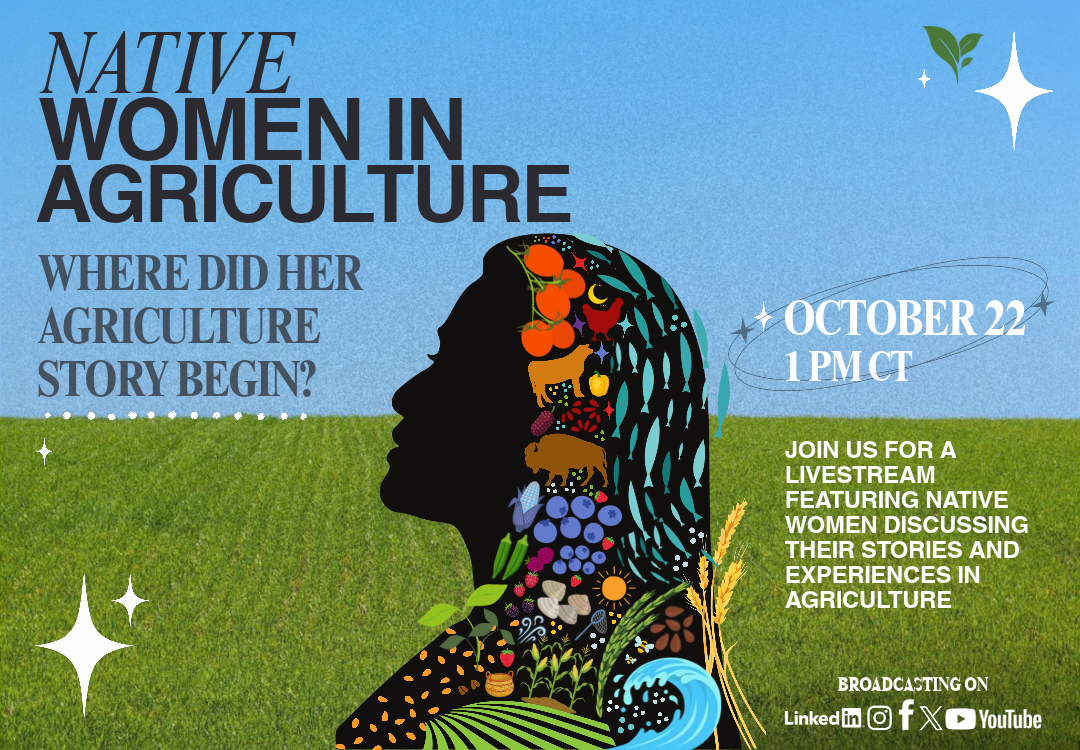
Join NAAF for a live broadcast October 22nd at 1 pm CT featuring conversations with Native Women in Agriculture
About the Native American Agriculture Fund
The Native American Agriculture Fund is a private, charitable trust devoted solely to serving Native American farmers and ranchers. NAAF provides grants to eligible organizations, including Tribal Nations, education institutions, community development financial institutions (CDFIs), and nonprofit organizations, in four core areas: business assistance, agricultural education, technical support, and advocacy services. NAAF was established through a rigorous legal process, ensuring independent oversight and a clear mission to support Native and rural communities most affected by systemic challenges.
The Keepseagle litigation and settlement marked a historic achievement by confronting decades of documented discrimination against Native American farmers and ranchers in U.S. Department of Agriculture programs. The settlement represented a significant effort to address longstanding allegations of discrimination affecting Native American agricultural producers. The remedies provided real, tangible benefits to certified class members who alleged and documented harm. NAAF is a draw-down trust with a finite term of twenty years, after which the trust terminates.
We urge policymakers, government leaders, key stakeholders, and the press to closely examine the significant legacy and ongoing impact of the Keepseagle Trust.
Who We Are and What We Do
NAAF’s origins are rooted in the Keepseagle v. Vilsack class action lawsuit, filed in 1999 by a proposed class of Native American farmers and ranchers who alleged that the United States Department of Agriculture had systematically denied them equal access to farm loans and loan servicing since at least 1981, in violation of the Equal Credit Opportunity Act. Over the course of more than a decade of litigation, a substantial evidentiary record was established, and the class was proposed to a federal court. Through the litigation, investigations were conducted, harms were documented, expert analysis was completed, and substantial individual and statistical evidence concerning discriminatory loan denials was developed in the litigation record. Rather than continue a lengthy legal battle, the U.S. Department of Agriculture entered into a negotiated settlement agreement in 2010, a common and appropriate resolution mechanism in large-scale federal civil rights litigation that allowed both parties to bring the matter to a close without the uncertainty and cost of continued proceedings.
The 2011 settlement, approved by the United States District Court for the District of Columbia, created a $680 million compensation fund, $80 million in debt relief, and additional programmatic reforms at USDA. Over 4,300 claims were filed, and more than 3,600 were approved for payment by an independent, court-appointed Neutral, with claimants receiving direct payments of up to $50,000 under Track A or up to $250,000 under Track B based on documented economic loss.
The Cy Pres Provision is Standard, Court-Approved Practice in Class Litigation
Following the claims period, approximately $380 million in settlement funds remained undisbursed. The reasons for this were directly tied to the original harm: many Native American farmers and ranchers who should have been eligible could not be identified or reached during the six-month claims period. The discrimination (and class period) extended over three decades, so many class members were deceased by the time of the settlement. Geographic isolation, distrust of federal agencies built over generations, lack of legal representation, and the cultural and linguistic challenges of outreach across Indian Country meant that the full universe of affected individuals was never completely reached. The claims period was legally constrained in duration, and many individuals who suffered discrimination could not locate the required documentation or did not learn of the settlement in time.
To address those remaining funds in a manner consistent with the purposes of the original litigation, the settlement agreement provided for a cy pres distribution, a standard and well-established legal mechanism used in class action settlements throughout the federal court system. The term cy pres, derived from the French phrase meaning “as near as possible,” directs unclaimed or undistributed settlement funds to purposes that approximate the intent of the original litigation when direct individual distribution is impractical or impossible.
The cy pres provision in Keepseagle was included in the original 2010 settlement agreement approved by the federal court; the district court approved modifications that permitted a second distribution to prevailing claimants, and provided greater structure for the implementation of the cy pres, and the United States Court of Appeals for the District of Columbia Circuit in May 2017. The United States Supreme Court declined to hear an appeal in March 2018, allowing the distribution plan to stand. Following years of additional negotiation and further court-supervised process, NAAF was formally established in 2018 to receive and deploy those remaining funds in direct service of Native American agricultural communities.
What NAAF Does Today
NAAF is an independent, charitable, draw-down trust dedicated exclusively to Native American agriculture in the United States and governed by a Board of Trustees and fiduciary obligations. It operates entirely independently from the federal government. NAAF’s work is directly tied to the same communities at the center of the Keepseagle litigation. The Trust’s twenty-year term reflects purposeful deployment of funds over time, building long-term capacity for Native American agricultural producers.
NAAF has a competitive, mission-driven grant process that awards grants to eligible entities that demonstrate the capacity to deploy grant funds toward the Trust’s mission. All grants must support one or more of NAAF’s four core areas, as outlined in the Trust agreement, which includes business assistance, agricultural education, technical support, and advocacy services for Native American farmers and ranchers. Grants that do not serve the mission are not eligible for funding. The terms of the court-established Trust Agreement legally constrain NAAF’s grantmaking.
NAAF’s Trust Agreement identifies four categories of eligible grant recipients, each with proximity to Native farming and ranching communities and demonstrated capacity to deliver services at the ground level. Native agricultural communities are diverse in their geography and governance structures.
NAAF’s role today is to fund entities with the capacity and infrastructure to address the original harms and documented barriers to capital access for Native farmers and ranchers while also addressing the lasting consequences of those barriers and investing in a future where Native agricultural communities can thrive on their own terms. Every grant NAAF makes, every organization NAAF supports, and every Native farmer or rancher whose operation is strengthened by that support reflects the legal process, the community perseverance, and the court-supervised framework that brought NAAF into existence. NAAF is proud of that foundation and is committed to transparency, legal compliance, and mission fidelity.
Native American Agriculture Fund RESOURCES & PUBLICATIONS

THE NATIVE AMERICAN AGRICULTURE FUND RELEASES 2025 annual report
The Native American Agriculture Fund’s 2025 Annual Report highlights the partnerships, progress, and impact NAAF grantees are making to advance agriculture across Indian Country.
Click the button below to reflect on a year of success and service.
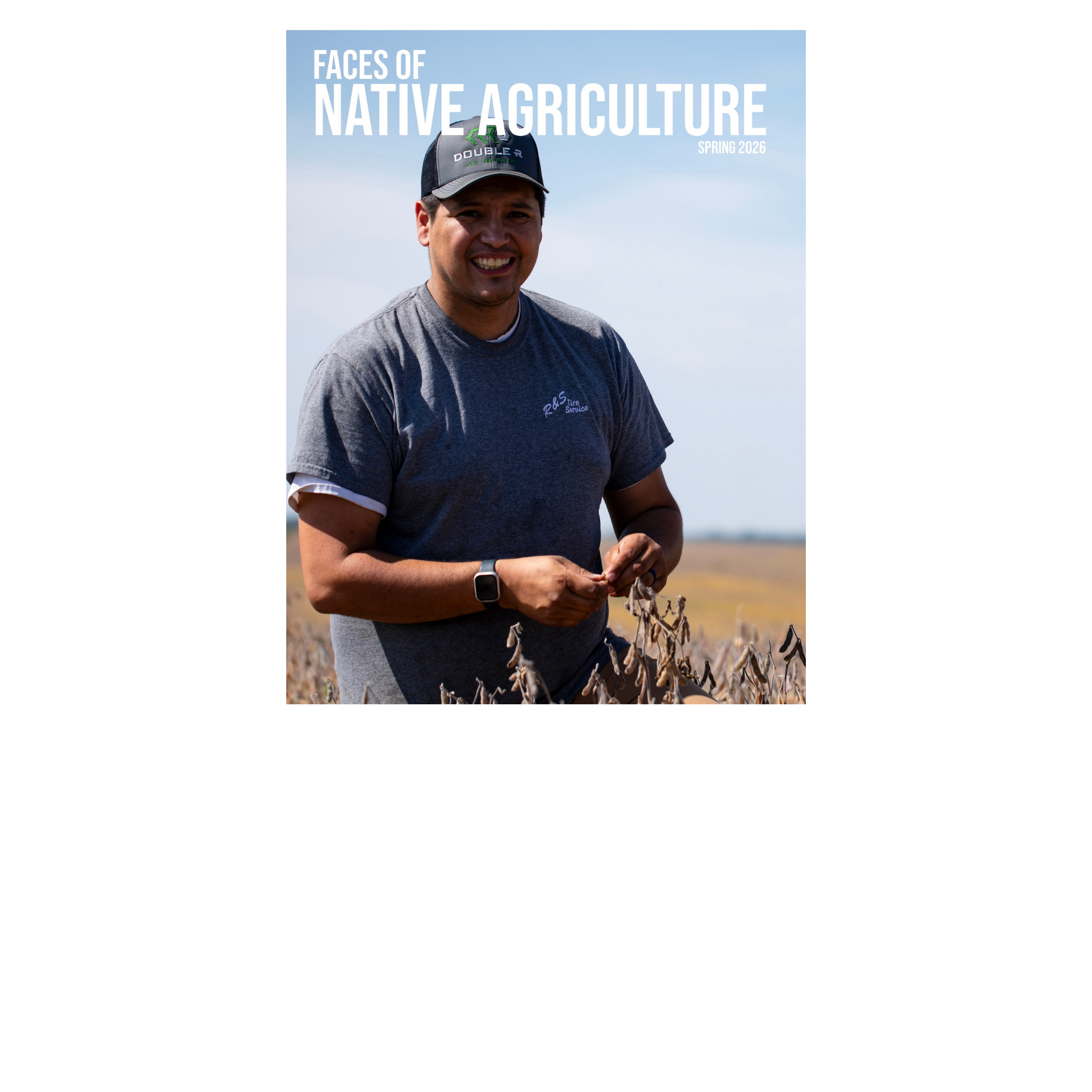
FACES OF NATIVE AGRICULTURE – SPRING 2026
Meet the farmers, ranchers, and advocates who are growing the future of Native agriculture with the first edition of Faces of Native Agriculture. These are the stories behind NAAF’s mission, told by the people living them.
Click the button below to explore these stories.
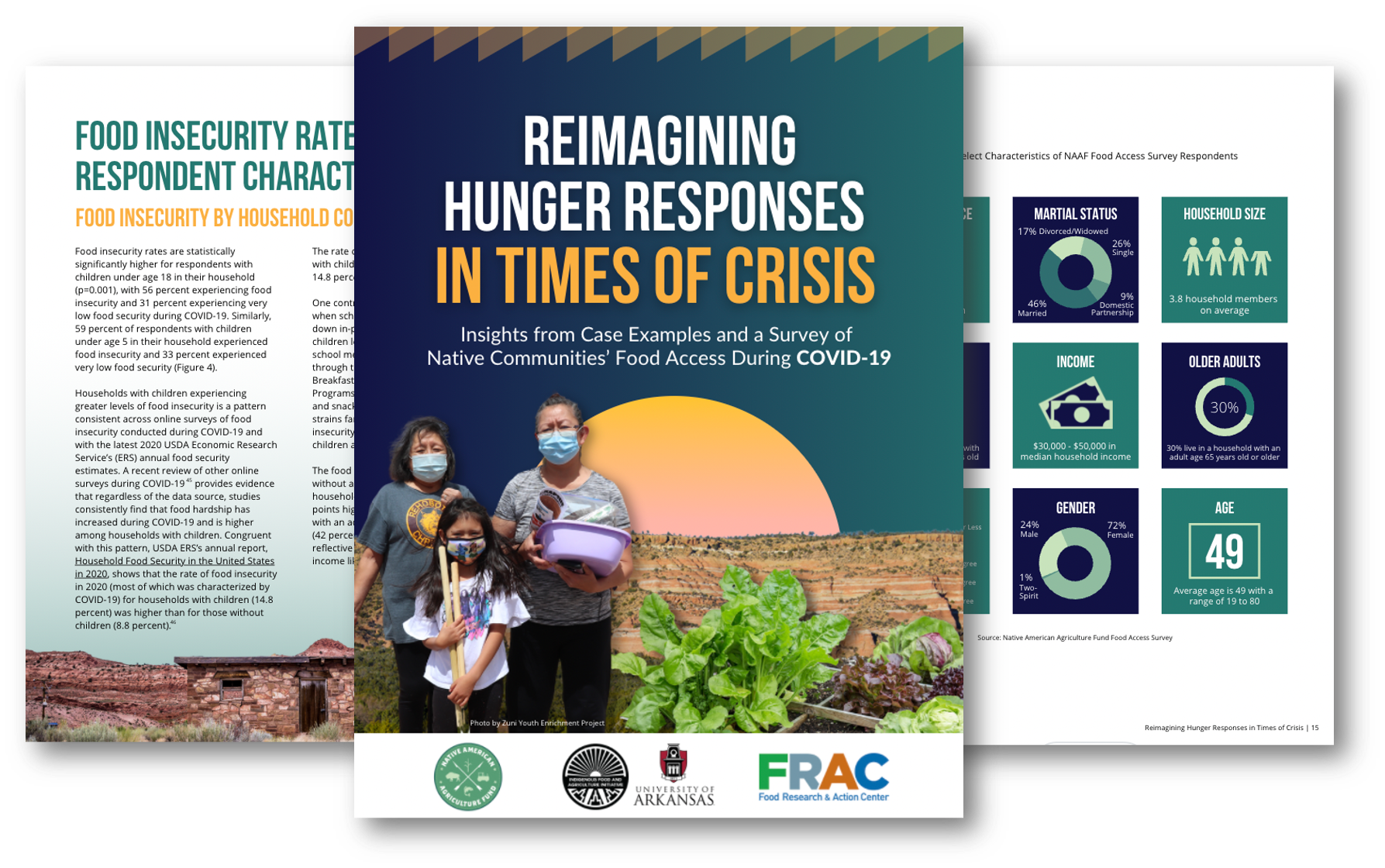
Reimagining Hunger Responses in Times of Crisis
Learn more about findings and recommendations from a survey which illuminates the challenges of food security in Indian Country during COVID-19 and the Tribally-driven solutions needed to address those challenges head on.
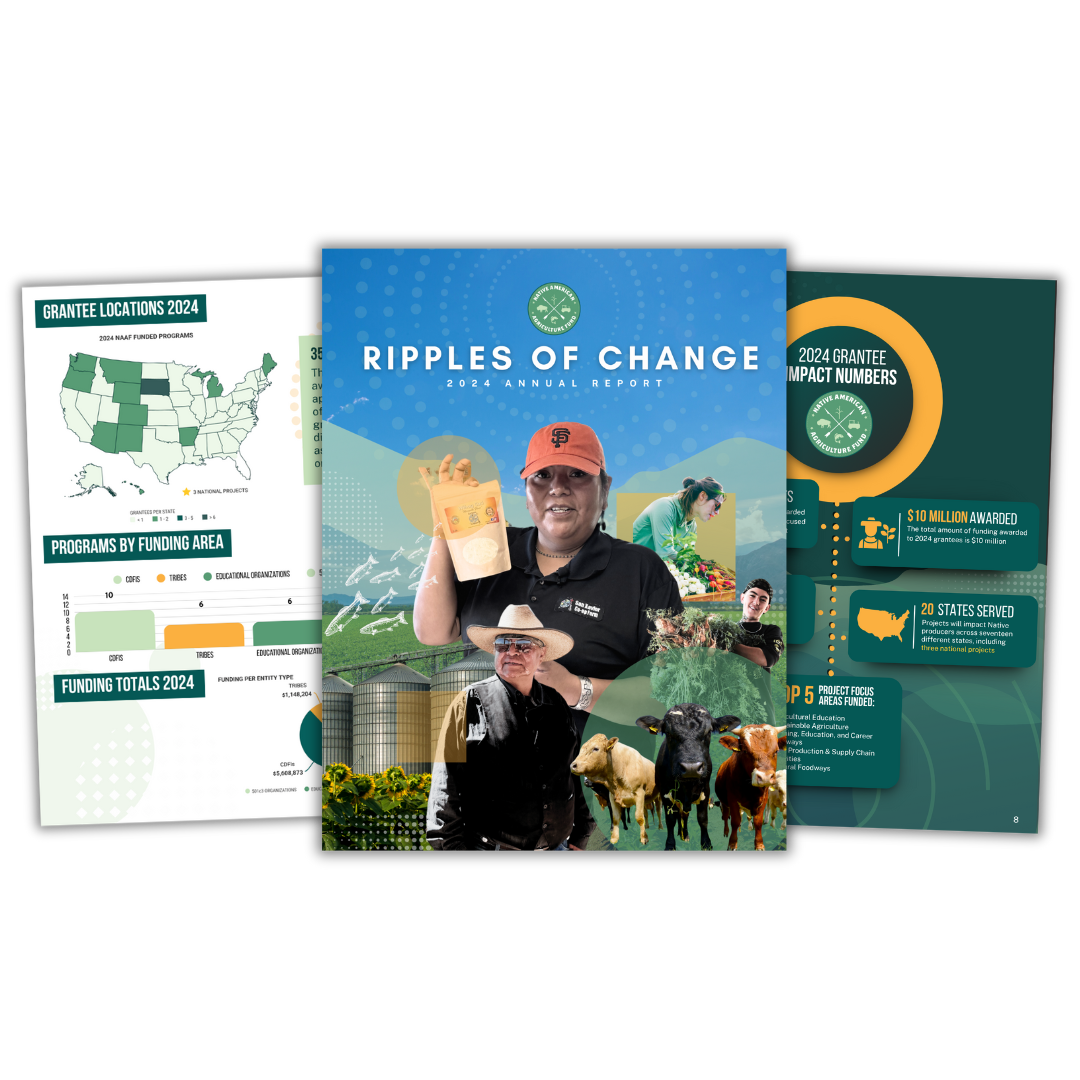
THE NATIVE AMERICAN AGRICULTURE FUND RELEASES 2024 annual report
Explore how the Native American Agriculture Fund’s 2024 Annual Report, Ripples of Change, highlights a year of strategic investments that fuel innovation, food security, and economic growth across Indian Country. Each grant is a ripple, supporting Native-led solutions that strengthen local food systems and rural infrastructure.
Stay Engaged with NAAF
Trust Agreement
Read the trust agreement to learn more about specific requirements of our operations and grants.
NAAF Grantees
NAAF provides grants to eligible entities in order to support Native farmers and ranchers.
Educational Resources
NAAF is always working with our grantees to develop resources for Native agriculturalists.
News and Updates
Stay informed on news related to NAAF and Native American Agriculture.